Truyền thông
FRESH BIRD'S NEST vs DRIED BIRD'S NEST - WHICH IS BETTER? WHICH SHOULD YOU CHOOSE?

When shopping for bird’s nest products, you’ll find a wide variety to choose from—such as dried bird’s nest, fresh bird’s nest, raw bird’s nest, and refined bird’s nest. So, between dried and fresh bird’s nest, which one should you buy? Which offers better quality, longer shelf life, and the highest nutritional value? Let’s explore the answer with Yen Dao Can Gio.
Bird’s nest is a nutritious food that benefits the health of the entire family—especially the elderly, those recovering from illness, and young children. Choosing between dried and fresh bird’s nest depends on your intended use and personal needs.
Dried bird’s nest currently comes in three forms: raw bird’s nest, refined bird’s nest, and feather-removed bird’s nest. Each type has its own distinct characteristics:
Raw Bird’s Nest: This is the pure form of bird’s nest harvested directly from the source. It still contains feathers, impurities, and natural debris, and has not undergone any cleaning process before being dried. Raw bird’s nest retains its full nutritional value and has a distinct aroma, making it difficult to counterfeit. While it is more affordable, the cleaning process is time-consuming, so it may not be the preferred choice for everyone.
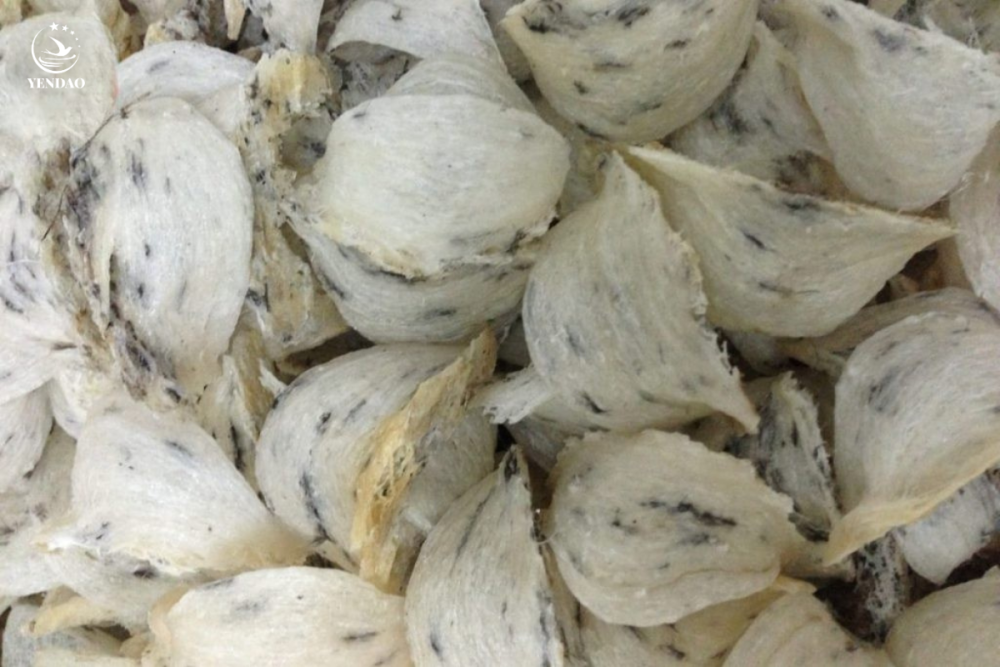
Refined Bird’s Nest: Refined bird’s nest is made by soaking harvested nests in water to soften them, then removing feathers and impurities. The cleaned nest is then molded into shape and cold-dried. Advantages: It is ready to use immediately without requiring additional cleaning. Drawbacks: The nutritional content may be reduced due to the processing steps. Additionally, refined bird’s nest is more prone to counterfeiting and adulteration with fillers.
Feather-Removed Bird’s Nest: This type is made from raw bird’s nest that is misted with water to loosen feathers and impurities without soaking. This method preserves the nest’s original shape and nutritional value. Because it requires more time and manual effort, feather-removed bird’s nest is typically more expensive.
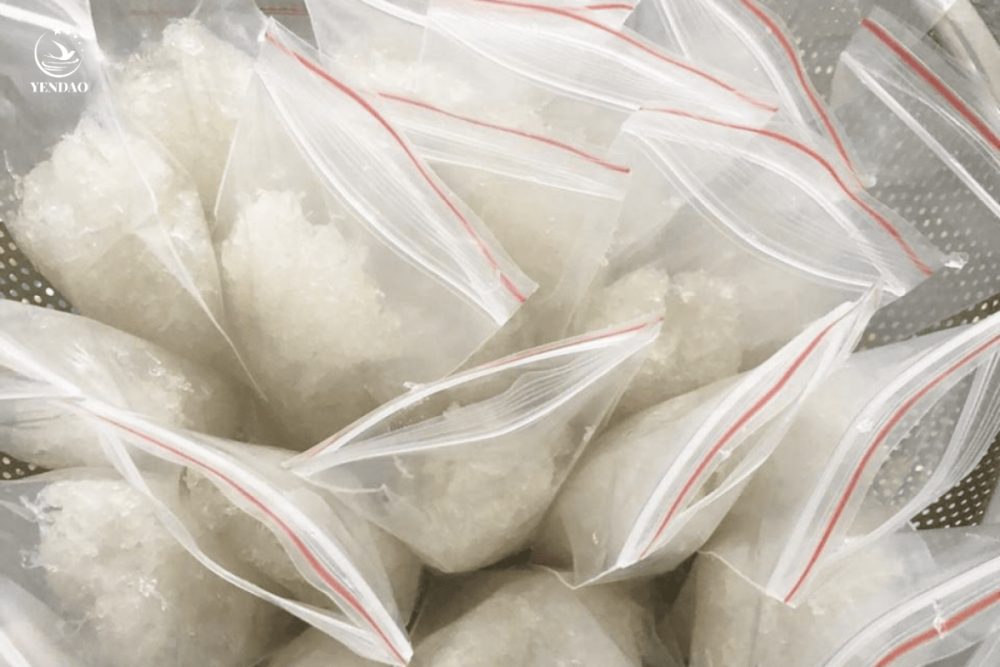
Fresh bird’s nest is made by soaking harvested nests in water to expand them, then removing feathers and impurities. After draining, the nest is packaged without drying and can be used immediately. The preparation process is similar to refined bird’s nest—soaking, separating, and cleaning—but it is not reshaped or dried afterward. As a result, fresh bird’s nest is significantly more affordable than dried bird’s nest.
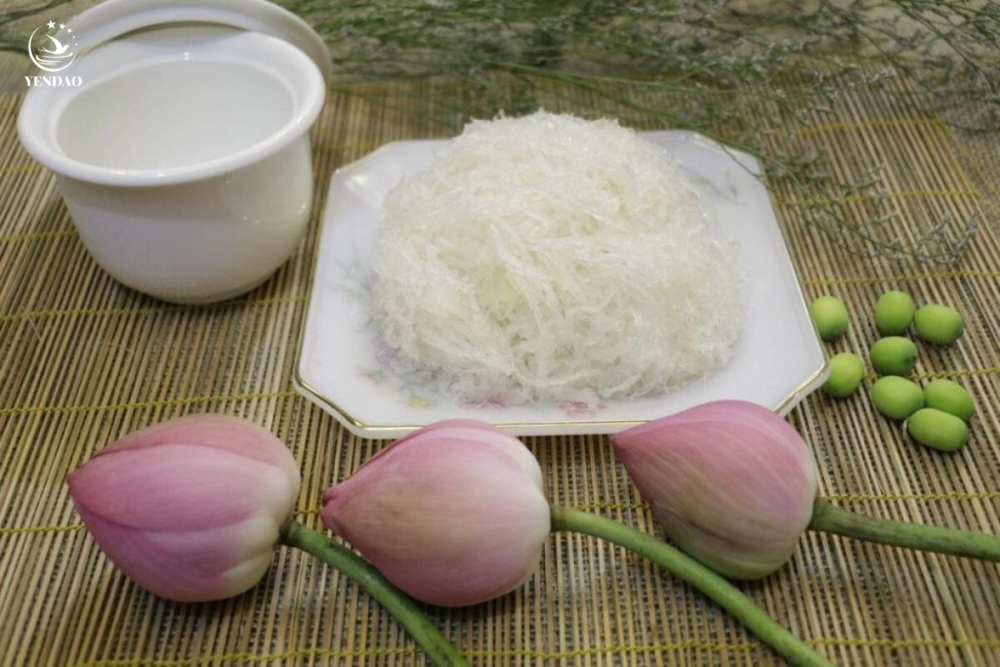
To help you decide which type of bird’s nest to choose, below is a comparison between dried and fresh bird’s nest based on key factors:
| CRITERIA | DRIED BIRD'S NEST | FRESH BIRD'S NEST |
| Nutritional Value | Depends on the type. Highest in raw nest, followed by refined nest. | Higher than raw dried bird’s nest. |
| Price | Higher | Lower |
| Shelf Life | 1 – 3 years | 1–3 months if stored in the freezer. 1 week if kept in the refrigerator. Since it’s usually packed in zip bags and remains moist, it should be consumed quickly.
|
| Preparation | Requires cleaning and soaking before use | No preparation needed |
| Convenience | Needs soaking for 20–30 minutes if pre-cleaned. Raw nest requires 40–60 minutes plus cleaning time. | Can be steamed for 20 minutes and consumed immediately. |
| Authenticity | Hard to counterfeit if it’s raw or feather-removed nest | Easier to counterfeit using tree gum, snow fungus, or jelly-like substances |
Based on the comparison above, your choice should depend on your intended use:
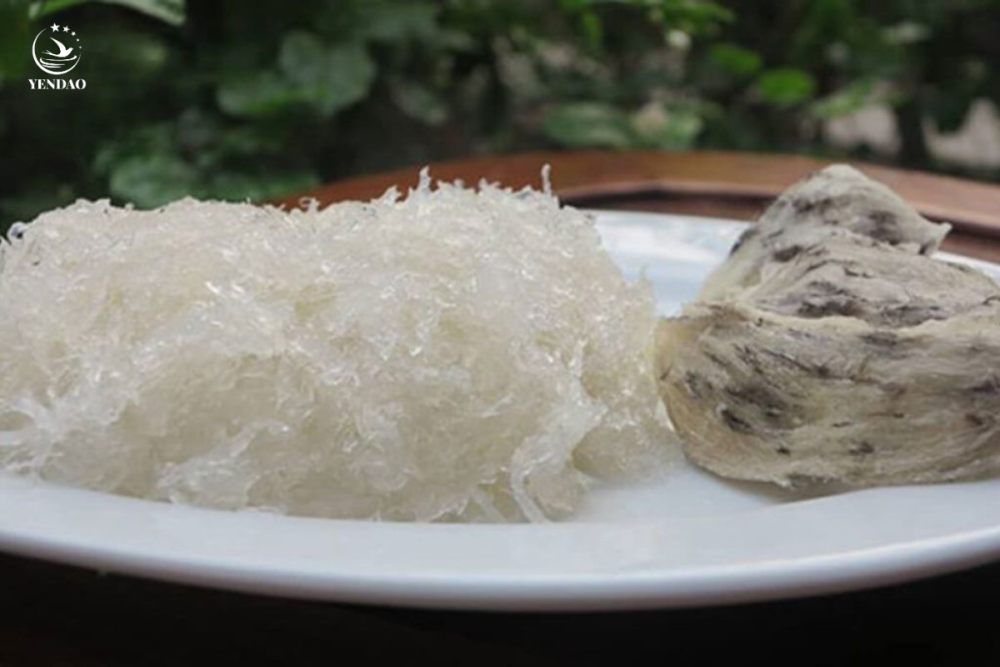
In general, most experts agree that dried bird’s nest is superior to fresh bird’s nest. While fresh bird’s nest is easier to prepare and can be consumed immediately without waiting, its moist condition requires careful storage. Moreover, fresh bird’s nest can only be transported over short distances—long-distance shipping risks spoilage and nutrient loss.
On the market, it’s not uncommon for some suppliers to use leftover fragments from the refinement process to produce fresh bird’s nest. These strands are usually small, lack the desired chewy texture, and are less appealing to consumers.
So, which type of dried bird's nest should you choose? Among the three types—raw, feather-removed, and refined—raw whole nests and feather-removed nests are generally preferred. Refined bird’s nest undergoes soaking, dismantling, feather removal, and drying, which may slightly reduce its nutritional content. Raw bird’s nest is harvested directly from the birdhouse and remains completely unprocessed, ensuring 100% purity. Feather-removed bird’s nest is cleaned using a dry feather-removal method without soaking, helping preserve more nutrients compared to refined nests
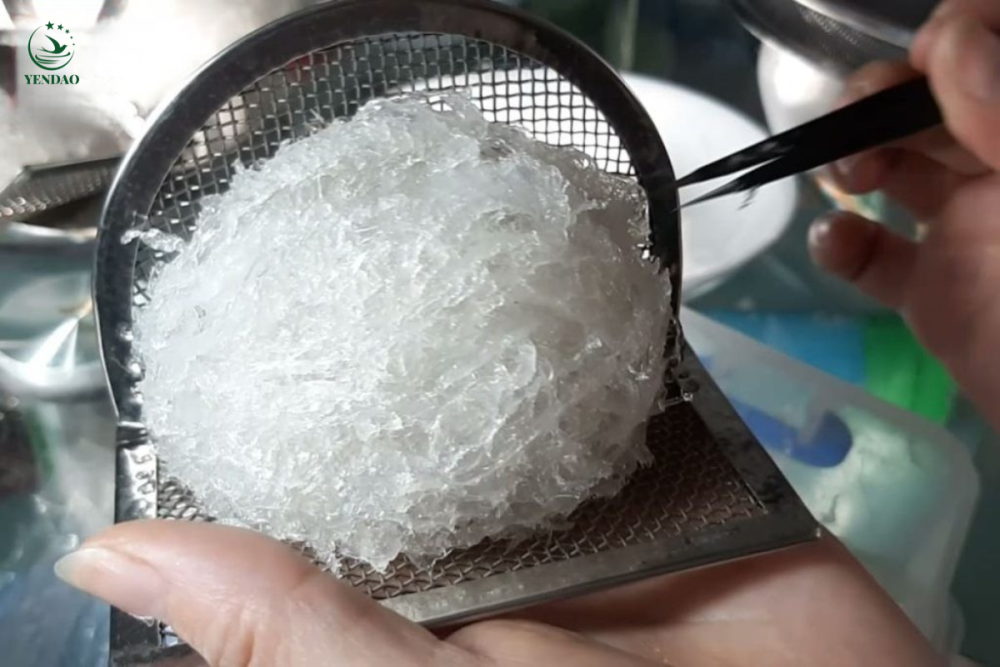
Nowadays, the most popular option among consumers is to purchase refined bird’s nest or feather-removed bird’s nest to save time on preparation. After purchase, a single nest piece can be soaked in water to become fresh bird’s nest, then portioned into zip-lock bags and stored in the refrigerator for later use. One tael (100g) of dried bird’s nest, when soaked, will yield approximately 400–600g of fresh bird’s nest.
For those who prefer convenience and minimal preparation, ready-to-eat stewed bird’s nest in jars is the fastest option. These products come pre-cooked with a variety of ingredients such as red dates, goji berries, rock sugar, lotus seeds, and more—offering plenty of choices to suit your taste.
Each type of bird’s nest requires different storage methods and has a different shelf life:
Dried bird’s nest is easy to store. Simply seal it tightly and keep it in a cool, dry place away from direct sunlight and heat. Avoid humid or poorly ventilated areas, which can promote mold and bacterial growth. Properly stored dried bird’s nest can last up to 3 years.
Method 1: Divide into small containers and store in the freezer. Defrost naturally before use. Shelf life: up to 6 months.
Method 2: Seal tightly and store in the refrigerator’s cool compartment. Shelf life: up to 1 week.
Method 3: For cooked bird’s nest (e.g., stewed), store in an airtight container in the refrigerator and consume within 7 days.
Bird’s nest is a premium product, so choosing a reliable supplier is essential to ensure that the price matches the quality. A trustworthy seller should provide full certification of product quality and a valid business license. Avoid buying through intermediaries—opt for direct harvesting facilities like Yen Dao Can Gio.
With 11 branches across both Northern and Southern Vietnam, Yen Dao Can Gio guarantees top-tier quality:
We hope this article helps you decide whether dried bird’s nest or fresh bird’s nest is the better choice for your needs. Make a smart and informed decision when purchasing bird’s nest. If you have any questions or are unsure which type to buy, feel free to contact Can Gio Island Bird’s Nest for expert advice.
Bài viết nổi bật

 26/10/2025
"VÀNG TRẮNG" CẦN GIỜ ĐƯỢC TÔN VINH


CÔNG TY CỔ PHẦN YẾN ĐẢO CẦN GIỜ
Trụ sở chính: 170 Đường Đào Cử, Khu phố Phong Thạnh, Xã Cần Giờ, Thành phố Hồ Chí Minh, Việt Nam
Email: contact@yendaocangio.com
Hotline: 1900 866 837
Mã số thuế: 0315675327
Mã số đăng ký kinh doanh: 0315675327
© Bản quyền thuộc về CÔNG TY CỔ PHẦN YẾN ĐẢO CẦN GIỜ