Truyền thông
HOW TO PRESERVE RAW BIRD'S NEST, FRESH BIRD'S NEST, AND UNCLEANED BIRD'S NEST (WITH FEATHERS)

How long can bird’s nest be stored? Because bird’s nest is very expensive, proper storage must be a top priority. The following tips will show you the right way to preserve bird’s nest depending on each popular type available today.
How long can raw bird’s nest be stored? Raw bird’s nest (also called uncleaned bird’s nest with feathers) is one of the easiest types to preserve. After harvesting or purchasing, the best way to store raw bird’s nest is to keep it in a clean, well-ventilated place, avoiding damp areas. Do not expose the nest directly to sunlight or store it in places with excessively high temperatures, because direct sunlight will destroy nutrients, shorten its shelf life, or worse, eliminate its beneficial effects.
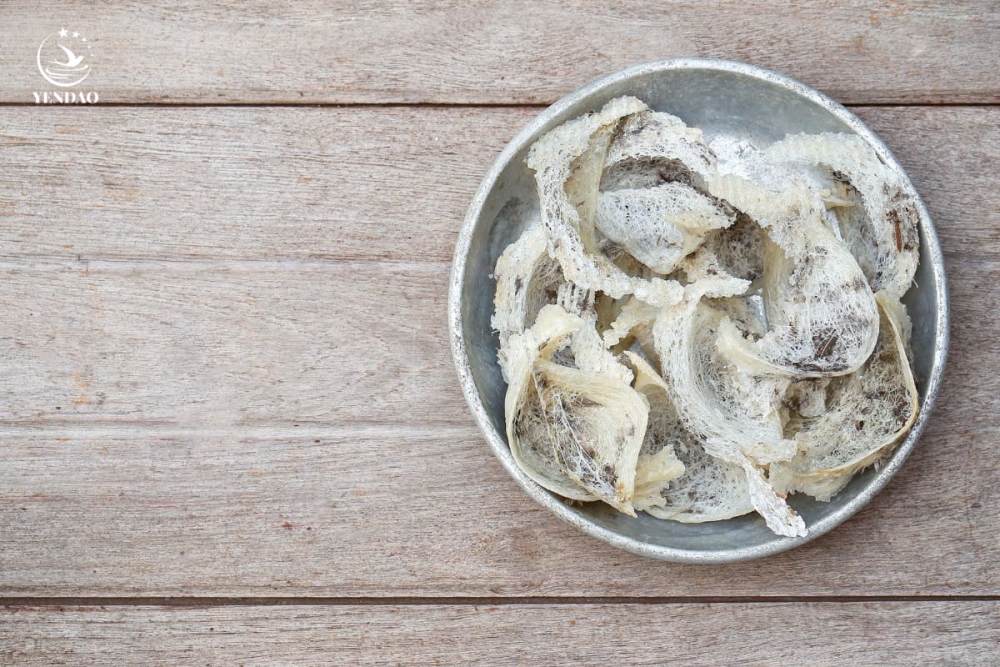
The shelf life of raw bird’s nest depends greatly on the dryness of the environment. When purchased, raw bird’s nest is not always completely dried. You should carefully check its condition; if it is still damp, make sure to dry it thoroughly before storing.
Some bird’s nest farms, during harvesting, spray a little water onto the raw nests to make collection easier, leaving a certain amount of moisture inside. When buying, you should ask the supplier carefully, or if you notice the nest is slightly moist, place it outside and air-dry with a fan for about 8–12 hours. When touched, the nest should feel dry, firm, brittle, and easy to break—this is the standard. At that point, store it in a box in a dry place, away from direct sunlight.
Note: During storage and gradual use, you should regularly check to prevent mold, discoloration, or damage that makes the nest unusable.
This type of bird’s nest has already been cleaned and dried. Consumers only need to soak it in water and then steam it for use. The method of storing refined or semi-cleaned bird’s nest is similar to storing raw bird’s nest: keep it in a dry, well-ventilated place, away from direct sunlight and humidity.
Important: When storing refined bird’s nest, only take out half a nest or the appropriate portion each time you need it. Refined bird’s nest is usually dry, brittle, and easy to break. Therefore, in humid climates, always close the lid tightly after each use to limit exposure to moisture and prevent mold. If during use you notice the nest turning brown or black, it must be discarded immediately. Do not consume it to ensure health safety.
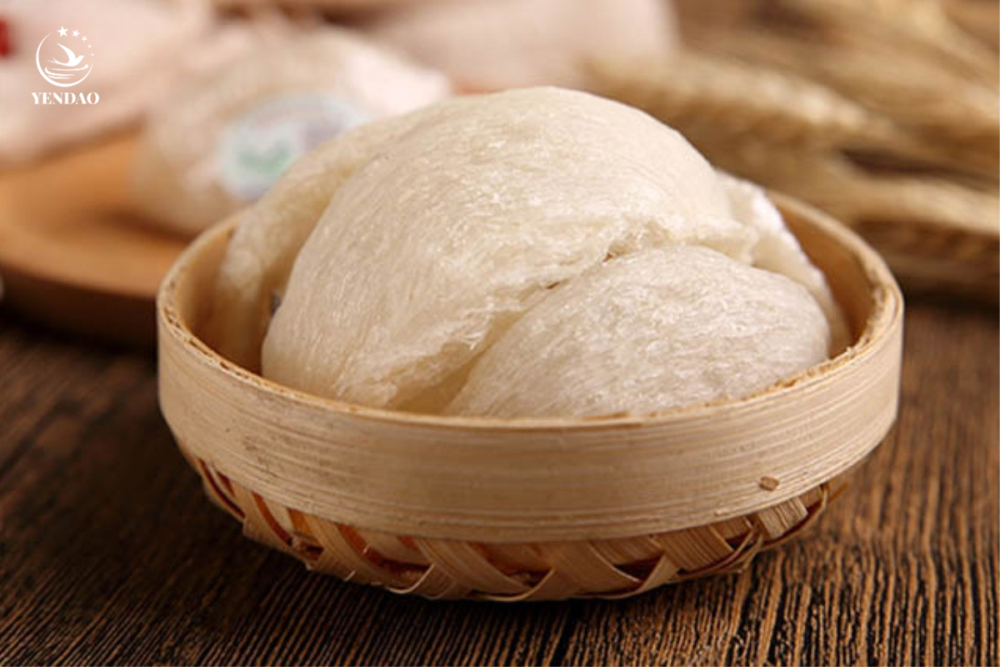
For refined bird’s nest that you process at home rather than buying from a store: Make sure you have thoroughly removed all feathers and dirt, and ensure you use an appropriate drying method. Afterwards, place the nest in an airtight container and store it in the refrigerator (cool compartment). Consume it within 1 week. Do not keep it too long, as the beneficial nutrients will gradually be lost.
If you want to store homemade refined bird’s nest for longer, you can carefully wrap it in aluminum foil and use it within 30 days. To avoid spoilage, it is best to refine only enough bird’s nest for one serving. Do not over-process, store for too long, or consume more than the recommended amount, as excess nutrients will be expelled by the body, which is wasteful.
Soaked bird’s nest, also called fresh bird’s nest, has already been cleaned of feathers and impurities. It can be used immediately, but its shelf life is very short under normal conditions. The method of storing fresh bird’s nest differs from dried bird’s nest, though it is not too complicated. You only need to pay attention to the quantity and the time frame for consumption. Specifically, you can refer to three methods:
Important note: Never store bird’s nest after cleaning by drying under sunlight, using an oven, or microwave at high temperatures, as this will destroy its nutrients.
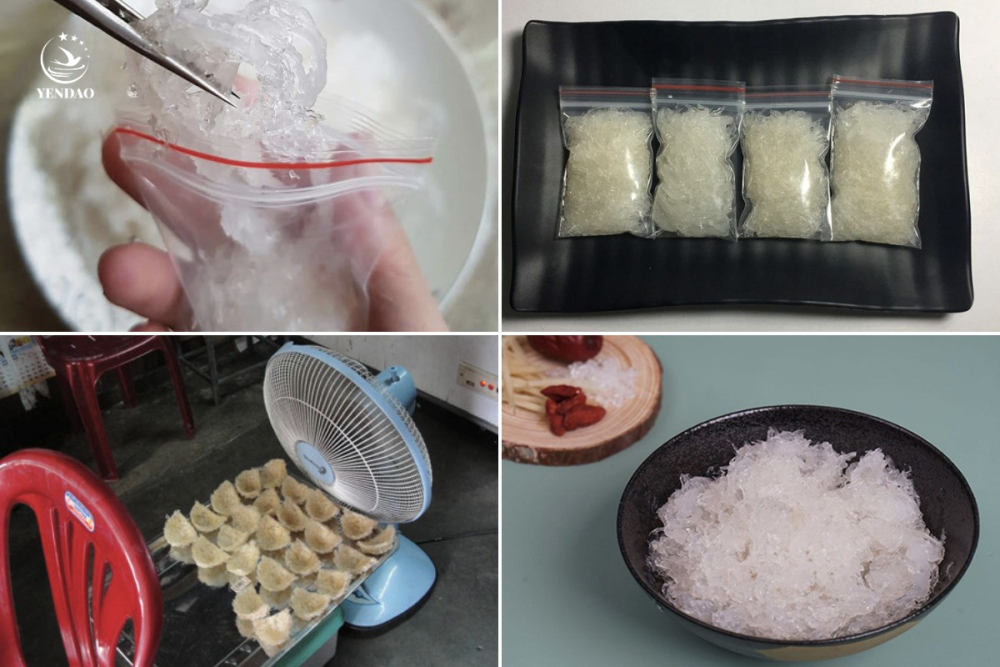
If your family does not have a refrigerator to store cleaned bird’s nest, you can partially dry it and keep it at room temperature for about 2 days. It is recommended to consume the nest as soon as possible, because leaving it at room temperature for many consecutive days may cause nutrient loss, spoilage, and potential harm to health.
There is no exact time frame for using cooked bird’s nest, as it depends greatly on the ingredients used. Specifically, if the nest is cooked with rock sugar or steamed without sugar using traditional methods, the storage time will be longer compared to when other ingredients are added.
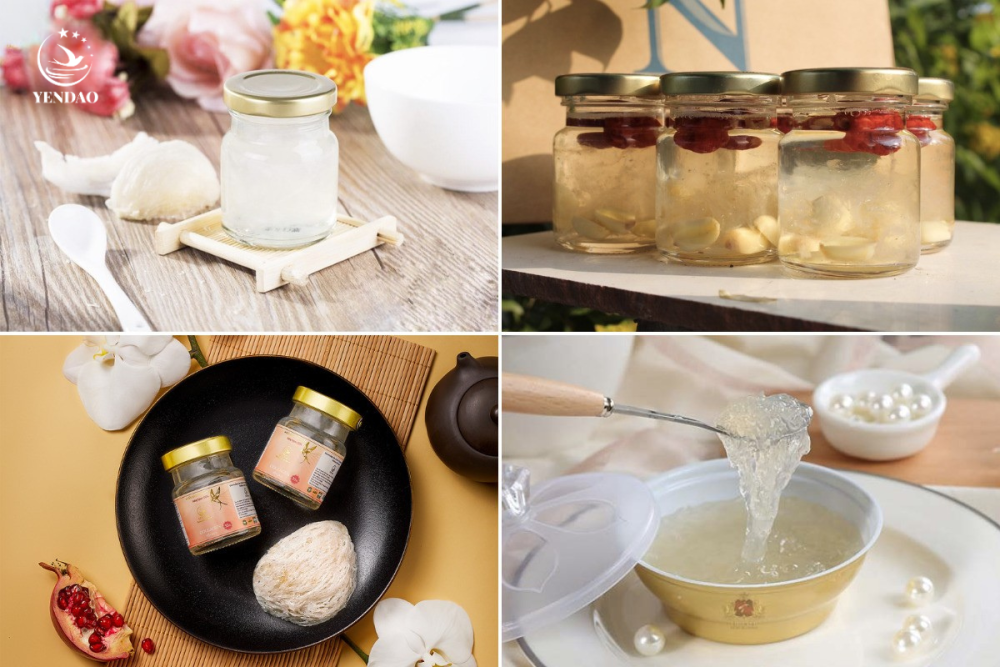
Cooked bird’s nest with rock sugar can be stored in the refrigerator (cool compartment) for up to 14 days. For bird’s nest cooked with additional ingredients such as lotus seeds, red dates, goji berries, ginger, etc., the maximum shelf life should not exceed 10 days. Consuming it after this period will reduce its effectiveness and may negatively affect health.
For ready-to-eat bird’s nest products made using modern methods and closed production processes that meet food safety standards, the shelf life depends on the manufacturer’s regulations and can range from 6 months to 1 year.
However, attention must be paid to the storage environment of cooked bird’s nest to ensure the best preservation. The optimal way to store cooked bird’s nest is in tightly sealed jars placed in the refrigerator. If cooked bird’s nest is left uncovered, it will turn into liquid within just 1–2 days. In some cases, it can be stored at normal room temperature, but must be kept away from direct sunlight.
Depending on the type of bird’s nest, you need to apply the appropriate storage method. However, you should not overuse the storage methods mentioned above to keep large quantities for too long. The best practice is to prepare only the amount you need. Consuming bird’s nest immediately after preparation will taste better and be healthier, ensuring nutrients are absorbed most effectively.
Key notes on storing bird’s nest:
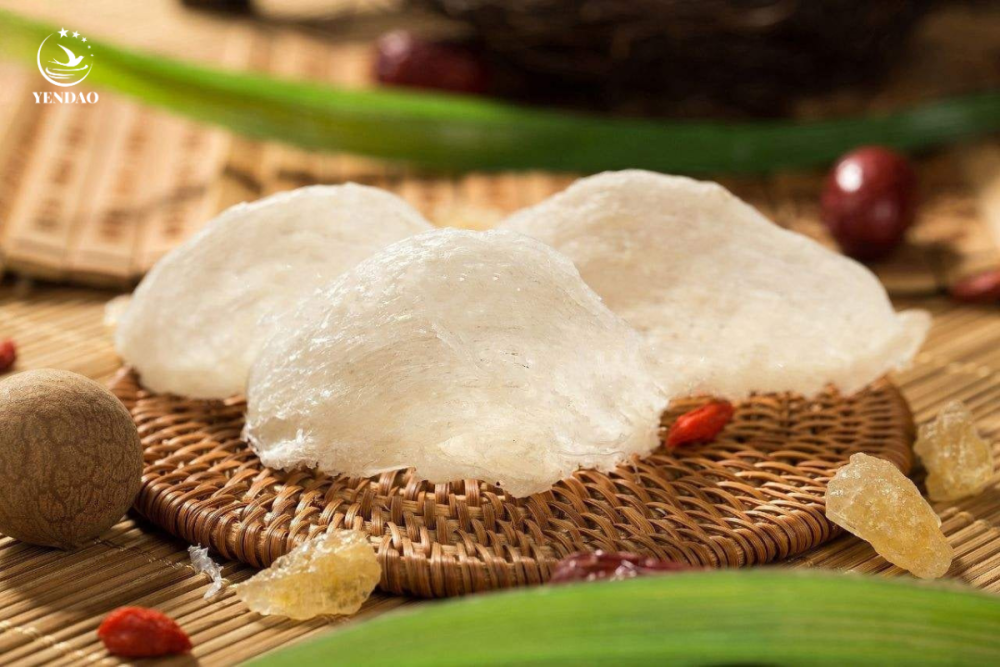
Bird’s nest is one of the premium and highly nutritious foods, chosen by many people today. Yến Đảo Cần Giờ hopes that the above article has provided complete information on how to store bird’s nest so that you can apply it in the best way, ensuring the product always remains fresh, delicious, and safe for consumption.
YEN DAO CAN GIO JOINT STOCK COMPANY
Address: 170 Đào Cử Street, Phong Thạnh Quarter, Cần Giờ Commune, Ho Chi Minh City, Vietnam.
Email: contact@yendaocangio.com
Hotline: 1900 86 68 37
Website: https://yendaocangio.com
Bài viết nổi bật

 26/10/2025
"VÀNG TRẮNG" CẦN GIỜ ĐƯỢC TÔN VINH


CÔNG TY CỔ PHẦN YẾN ĐẢO CẦN GIỜ
Trụ sở chính: 170 Đường Đào Cử, Khu phố Phong Thạnh, Xã Cần Giờ, Thành phố Hồ Chí Minh, Việt Nam
Email: contact@yendaocangio.com
Hotline: 1900 866 837
Mã số thuế: 0315675327
Mã số đăng ký kinh doanh: 0315675327
© Bản quyền thuộc về CÔNG TY CỔ PHẦN YẾN ĐẢO CẦN GIỜ